Thyronex is a capsule supplement. The seller page lists 22 ingredients: 18 botanicals, 3 amino acid nutrients and zinc. Two amounts are printed per serving of 2 capsules, and the rest sit inside a proprietary blend with one total. This page lays the whole list out.
Thyronex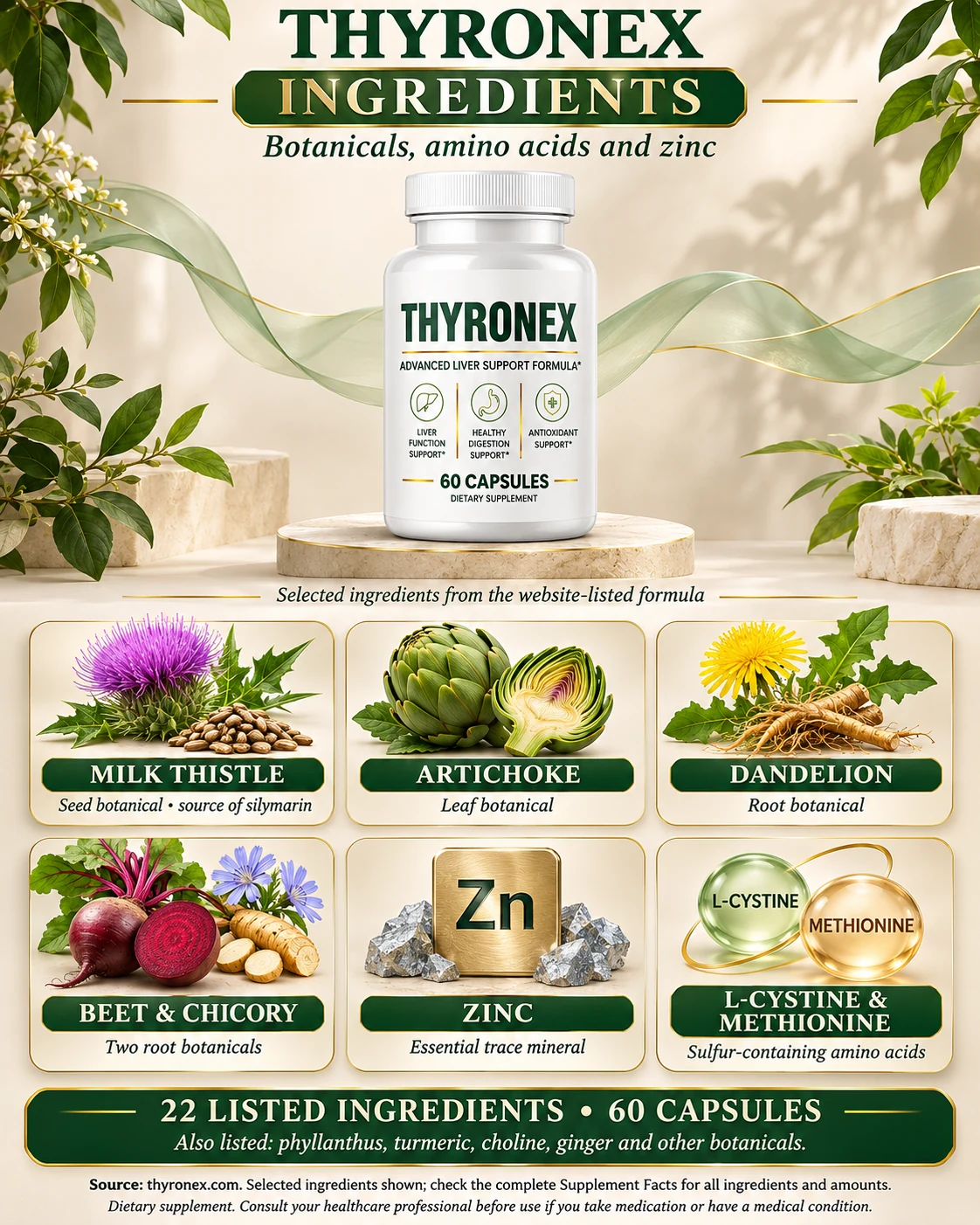
What The Seller Page Prints Per 2 Capsules
| Line | As printed |
|---|---|
| Serving size | 2 capsules, once a day with a meal and a glass of water |
| Servings per bottle | 30 (60 vegetable capsules) |
| Zinc (as zinc oxide) | 30 mg, 273% of the Daily Value |
| Milk thistle (seed) | 200 mg |
| Seven botanicals | 50 mg each: beet root, artichoke leaves, phyllanthus whole plant, dandelion root, chicory root, yarrow flowers, jujube seed fruit |
| Proprietary blend | 571 mg in total, no split between its 13 items |
| Other ingredients | Cellulose (vegetable capsule), rice flour, magnesium stearate (vegetable), silicon dioxide |
A proprietary blend gives one total only. Spread evenly, 571 mg across 13 items is about 44 mg each. The real split is not printed, so treat that as a rough sense of scale and not a measurement.
ThyronexThe Seven Botanicals At 50 Mg Each
| Ingredient | A plain-English note |
|---|---|
| Beet (root) | A root vegetable, here as a 50 mg extract. |
| Artichoke (leaves) | A leaf extract traditionally linked with bile flow and digestion. |
| Phyllanthus (whole plant) | A small tropical herb used in traditional medicine in several regions. |
| Dandelion (root) | A root used in traditional teas and coffee substitutes. |
| Chicory (root) | A root rich in inulin, a fibre. |
| Yarrow (flowers) | A daisy-family flower used in traditional teas. |
| Jujube (seed fruit) | A date-like fruit with a seed used in traditional Asian medicine. |
The 13 Items In The 571 Mg Blend
| Ingredient | What kind of thing | A plain-English note |
|---|---|---|
| Celery seed | Seed | A spice seed also used in traditional teas. Human trials on liver outcomes are not shown. |
| Alfalfa herb | Leafy herb | A forage plant sold as a supplement. It can affect blood thinners because it contains vitamin K. |
| Burdock root | Root herb | A traditional root food and tea. Evidence for liver effects comes mostly from lab and animal work. |
| Yellow dock root | Root herb | A traditional herb. Large amounts can upset the stomach. |
| Methionine | Amino acid | A sulfur-containing building block that food protein supplies. The body uses it to make other compounds, including some used in the liver. |
| Grape seed | Seed extract | A source of plant polyphenols. Studies mostly look at blood vessels and blood pressure. |
| L-cystine | Amino acid | Two linked cysteine units. The body uses cysteine to make glutathione, an antioxidant. |
| Feverfew aerial parts | Daisy-family herb | Traditionally used for headaches. The seller says to check first if you react to ragweed or chamomile. |
| Choline | Nutrient | An essential nutrient found in eggs, meat and soy. It matters for liver fat handling and cell membranes. |
| Turmeric root | Root spice | Contains curcuminoids. Rare cases of liver injury have been reported with concentrated turmeric products. |
| Raspberry fruit | Fruit | A fruit with plant colour compounds. Amount here is not printed. |
| European barberry extract | Root, rhizome and bark extract | Contains berberine-type compounds. Barberry is not for use in pregnancy. |
| Ginger root | Root spice | A kitchen spice with a long history in digestion. Large doses can upset the stomach. |
Milk Thistle And Zinc, The Two Largest Lines
- Milk thistle seed, 200 mg. Silymarin-rich seed extracts have been studied for liver conditions for years. Reviews describe mixed results and small trials, and the amount of the active compounds in this product is not printed.
- Zinc, 30 mg. An essential mineral. The adult upper limit from all sources is 40 mg a day, so 30 mg is a large share of it. Count zinc from multivitamins before adding this.
Photos Of Nine Of The Ingredient Types
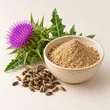
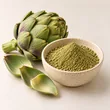
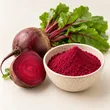
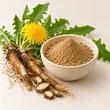
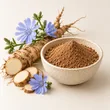
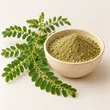
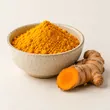
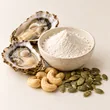
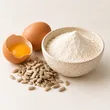
These are illustrative photos of each source, not photos of the capsule contents.
What To Check On Your Bottle
- Daisy-family allergy. Feverfew and yarrow are daisy-family plants. The seller says to ask a doctor first if you react to ragweed or chamomile.
- Zinc from other products. Add up multivitamins and cold lozenges.
- Medicine timing. The seller says to keep at least 4 hours between Thyronex and thyroid medicine.
- The safety seal. Do not use the product if the seal is damaged.
See also: Ingredient safety · Liver and thyroid · Label checklist · Milk thistle